Changeling Aspects
For Parents of Gender-Variant Young
For Parents of Gender-Variant Young
Links from Synopsis of Transsexualism
International Links from TranssexualRoadMap
GenderBridge -NZ A Great Site with a Vast Amount of Info.. See their "Resource" section.
Psychiatrists, Psychologists, Counsellors
Hair Removal & Facial Rejuvenation Etc






Queensland Police Service LGBTI Liaison

Australia's Internet Safety Advisory Body

Harry Benjamin's Syndrome
Basic Information
by Charlotte T.GA. and Melanie l'Heuremaudit
Translated into English.
See Main Webpage: http://sindromebenjamin.tripod.com/id19.html
Contents
What is Harry Benjamin's Syndrome?
How Harry Benjamin’s Syndrome is medically treated?
What is Harry Benjamin's Syndrome?
Harry Benjamin's Syndrome (HBS) is a congenital intersex condition that develops before birth, involving the differentiation between male and female. It is believed that every 1 out of 500 is born with this condition. Therefore, a girl with Harry Benjamin's Syndrome would have a female brain's sex but her genitals would appear male. The boys born under this condition have female genitalia even thought their brains are male. So far, it is impossible to diagnose this condition at the moment of birth causing the babies to be raised in the wrong gender role.
We now know that the brain is the only part of the body that can define one’s sex, therefore one's true sex is determined by the structure of the brain, and not by the genitalia. Gender identity is hard-wired in the brain and in deeper CNS structures. The main difference between Harry Benjamin's Syndrome and other intersex conditions is that there is no apparent evidence at the moment of birth making it impossible for doctors to diagnose it.
In comparison with other intersex conditions Harry Benjamin's Syndrome is twice, more frequent than Klinefelter Syndrome and five times more frequent than Turner’s syndrome. It is also known to be 25 times more frequent than Androgen Insensitivity Syndrome.
Most people with Harry Benjamin's Syndrome have been diagnosed around 20 to 45 years of age. This has not stopped people from having their genitalia reassigned and living a normal life afterwards. On the other hand, there are also people that have preferred not to have any surgeries and they are living happily as well but, it is recommended to have this condition treated as early as possible.
The level of distress experienced by people with Harry Benjamin's Syndrome does vary from person to person. Society's gender-related expectations are far from perfectly suited to all individuals, and not everyone would find being treated as the opposite gender to be all that terrible. People's degree of concern for their own appearance and anatomy is also variable - some couldn't care less what they had between their legs or how others perceived their gender. However, it is perfectly normal, and probably much more common, for people to place a great deal of importance in both their own and other people's physical and social gender. It may be something they take for granted and hardly think about, but that is only an indication of how deeply rooted it is. People with Harry Benjamin's Syndrome almost always experience growing dissatisfaction and unhappiness with both their bodies and their social gender role until they can correct them, even to the point of suicide if they feel they have no other solution to their problem.
The pain of living with Harry Benjamin's Syndrome is exacerbated by society's attitude towards it. Employers, friends, and especially family are often disbelieving and hostile towards people who reveal they have discovered they have Harry Benjamin Syndrome. In addition, society in general does not treat people whose appearance is gender ambiguous at all well, targeting them for verbal abuse, discrimination, and sometimes violence. This is hard enough to deal with without the loss of family support and possibly employment that often accompanies it. Though the cause of Harry Benjamin's Syndrome is undecided, and indeed, there may be more than one cause, the most likely explanation is some kind of hormonal irregularity during pregnancy. However, whatever the cause, it is a genuine, traumatic condition that deserves understanding and compassion.
How Harry Benjamin’s Syndrome is medically treated?
Note: This site only contains a brief explanation of the different aspects related to the treatment available for people living with Harry Benjamin's Syndrome. If you would like to learn more about it the following link is a great place to start: How is MtF transsexualism medically treated?
The early treatment of Harry Benjamin's Syndrome can eliminate virtually all the symptoms of the condition.
In order to properly reassign the person’s body to its proper gender the treatment will include Hormonal Replacement Therapy (HRT) and Genital Reconstructive Surgery (GRS).
To this day this Syndrome is mostly known as transsexualism, this terminology creates a problem in properly diagnosing and treating people living with this condition. The word transsexualism is usually linked to men wanting to be women or seen as a mental disorder. We still can find doctors referring to this Syndrome as Transsexualism. It may seem like the medical community is ignoring the most recent research about the brain and its relationship with gender. This is caused by the lingering and outdated use of words like ‘transsexuality’, ‘transsexualism’ and others.
The medical community of today is perfectly prepared to successfully treat Harry Benjamin's Syndrome, but large sections of this medical multitude is still lacking in quality diagnosis, caused by the lack of information-updates about this condition, leaving doctors stuck with the myths and conjecture of the past.
A personal suggestion concerning doctors is that you should not believe everything they say, because they may not have up-to-date information. I recommend listening to the doctors, (since they know how the human body works) but do not assume they cannot make mistakes; after all they are only human.
It is\r\nadvisable to visit an endocrinologist and give him or her up to\r\ndate information about Benjamin Syndrome, this way you will be opening\r\nthe door\r\nto receive more objective treatment.
\r\nA\r\npsychological follow up is very useful for a proper diagnosis of this\r\ncondition and its physical treatment afterwards.
\r\nIn most cases, it’s impossible to give a diagnosis\r\nbefore late\r\ninfancy or pre-adolescence, although countries like the Netherlands\r\nare\r\nvery advanced in diagnosing and treating this syndrome. Thanks to the\r\nhard work\r\nof Cohen-Kettenis, people living in the Netherlands are able to\r\nstart the\r\ntreatment before puberty.
\r\nIn Spain,\r\nalthough there are specialists in many communities, only the Andalucia Hospital\r\ncan offer complete treatment of this condition. It’s always a good idea\r\nto consult\r\nthe local GLBTIQ group.
\r\n(Gay\r\nLesbian
Transgendered Intersex Queer, asi lo estan poniendo ahora aqui\r\npero lo\r\npuedes dejar como quieras ^^)
\r\n
It’s important to remind that Benjamin Syndrome\r\nis a\r\nphysiological condition and not psychiatric, even though the help of a\r\npsychologist can be very useful to the patient, especially for the\r\nyoung ones.\r\nThe treatment of this condition includes HRT and GRS. You should always\r\nstart\r\nby visiting an endocrinologist and a surgeon first.
\r\n\r\n\r\n",0] ); //-->It is advisable to visit an endocrinologist and give him or her up to date information about Harry Benjamin's Syndrome, this way you will be opening the door to receive more objective treatment.
A psychological follow up is very useful for a proper diagnosis of this condition and its physical treatment afterwards can correct it completely.
In most cases, it is impossible to give a diagnosis before late infancy or pre-adolescence, although countries like the Netherlands are very advanced in diagnosing and treating this syndrome.
Thanks to the hard work of Cohen-Kettenis, people living in the Netherlands are able to start the treatment before puberty.
In Spain, although there are specialists in many communities, only the Andalucia's Hospital can offer complete treatment of this condition. It’s always a good idea to consult the local GLBTIQ group.
It is important to remind that Harry Benjamin's Syndrome is a physiological condition and not psychiatric, even though the help of a psychologist can be very useful to the patient, especially for the young ones. The treatment of this condition includes HRT and GRS. You should always start by visiting an endocrinologist and a surgeon first.
Reading more...
Diagnosing Harry Benjamin's Syndrome
Causes Of Harry Benjamin's Syndrome
Resources in other languages and for people living
with Harry Benjamin's Syndrome in Europe
Copyright @ 2005-2006 http://sindromebenjamin.tk
Perspective
by Charlotte T.GA. and Melanie l'Heuremaudit
Contents
From Transsexualism to Harry Benjamin's Syndrome.
The Problem of Terminology.
Harry Benjamin's Syndrome as Intersex Condition.
Three Final Statements.
From Transsexualism to Harry Benjamin's Syndrome.
Harry Benjamin's Syndrome was known until now as Transsexualism.
The term transsexualism was first introduced in the medical community in the ‘50s by Doctor Harry Benjamin, a pioneer in research into this condition, who supported a biological explanation, in spite of the difficulty in finding it. In those years, there was a great need to differentiate this condition from transvestism and homosexualism, and the term transsexualism seemed to be adequate to fill this need, given the still scientific darkness around this condition, and then they started talking about transsexuals for the first time.
Apart from this, Transsexualism was seen as a psychiatric condition in which a person felt they belonged to his or her opposite sex. This condition, at the time, seemed to be merely psychological or even “unexplainable”. (See as example Cauldwell's work: Psychopathia Transexualis, 1949)
However, after more deep research done in the last two decades about this condition, it was found that it is not a psychologically-based condition, and even the term transsexualism had become inadequate to describe it now.
We now know that what in the past was known as transsexualism is not a psychological condition, but it deals with neurological patterns. Transsexual people or people with Harry Benjamin's Syndrome already posses the brain of the sex they always knew they belonged to. Recent studies also point out that the sex of the brain is what determines the real sex of a person, therefore somebody born with Harry Benjamin's Syndrome is already a member of the "opposite sex". The term transsexualism becomes obsolete then because there is no change of sex but just only corrective surgery to be done. People with Harry Benjamin's Syndrome are already biologically of the sex they feel they belong to, as their brain sex and neurological structures already match their gender identity. What happens is that their neurological patterns of their brain are opposites to their genital sex. (See the related Medical Documentation).
The old “Transsexualism” is in reality an intersex condition where the brain sex does not match the genital sex. The nature of the condition is neurological instead of psychological, as it was believed in the past. Consequently, we cannot speak about Transsexualism (or modern Harry Benjamin's Syndrome), considering it as an orientation or a personal personality's feature, but only as a physiological condition, that requires early diagnosis and treatment.
Some very long-established "mental" disorders such as Schizophrenia or Manic-depressive Disorder, are no-longer seen as "mental" disorders today, but as diseases of the brain instead -just as Parkinson's disease or Alzheimer's disease are diseases of the brain too. In a similar way, Harry Benjamin's Syndrome (formerly Transsexualism) is no longer seen as a "mental" disorder either, but is now regarded by the world's leading experts in the field as another of the many biological variations that occur in human sexual formation - an intersex condition, where the sex indicated by the phenotype and genotype is opposite the morphological sex of the brain.
The old “Transsexualism” label and conjecture about it, urgently needs to be updated, and leave old superstitions about the condition in the past. There is too much stigma, negativity, superstitions and decades of media abuse and medical mistreatment attached to the word Transsexualism, apart from its inadequacy to describe this condition. It urgently needs to be replaced. Contemporary knowledge of the condition urgently needs to be updated. The endless mass-media sensationalism and misinformation about the subject must to be stopped.
The Problem of Terminology.
Terminology is probably the greatest problem in need to be solved by people with Harry Benjamin's Syndrome as group. It is about the group's identity, about Who we are, How we call ourselves, How we consider ourselves and How we introduce ourselves to the others. For to achieve full social assimilation we need first to reaffirm our identity as group and in doing so Terminology is definitely a key factor. Nowadays too much inadequate terms are used to refer to this condition and the people suffering it. Although those terms seemed to be the right ones in the past, they are obsolete today. Today the people just choose the term they like more or they prefer to use in a given moment, o even uses several different terms at the same time, as we can constantly see in different articles or publications related with Harry Benjamin's Syndrome, in all mass media kinds. This is not serious and not focused at all in the condition, and it does not happen with any other medical condition. Moreover the terms currently in use results to be as inadequate as harmful most of the time.
Therefore, we go to consider them:
a. "Harry Benjamin's Syndrome".
Harry Benjamin's Syndrome is named after Dr Harry Benjamin, a pioneer in research into this condition. His name is also used by the Harry Benjamin International Gender Dysphoria Association (( HBIGDA )-now>( WPATH )), who produces the widely followed Standards of Care for people with Harry Benjamin's Syndrome. A number of different names, “Harry Benjamin’s Syndrome” being an increasingly popular alternative to others currently in widespread usage, know the syndrome. Harry Benjamin's Syndrome is greatly preferable to the others because it lacks the misleading connotations and outright inaccurate meanings they possess.
b. "Transsexualism/ Transsexual(s)".
The most well known term for Harry Benjamin's Syndrome is Transsexualism (coined by Dr Harry Benjamin in the 1950s). Unfortunately, there are several problems with it. Simply including "sex" in the name attracts undesirable attention, and the word strongly implies a connection with sexual orientation that does not exist. It is too similar to "transvestism", a completely unrelated phenomenon (men who enjoy wearing women's clothing do not have much in common with men who were born with female anatomy and are very unhappy about it) that bears enough of a superficial similarity to cause much confusion. In addition, labelling people with Harry Benjamin's Syndrome with the term "transsexual" is a bad thing. Saying that people are transsexuals is dehumanizing, and makes it easier to think of them as being "other". People with Harry Benjamin's Syndrome are people, who happen to have a particular medical problem; it is not their identity, and they are not specimens of the condition. Use as an adjective is not much better; with "transsexual man" or "transsexual woman", it is too easy for "transsexual" to be interpreted as "pretend", and for some reason many people seem to be confused about whether the appropriate noun for any particular individual is "man" or "woman".
After being raised in the wrong gender role and had been through so much emotional confusion in the past, the most needed for a person with Harry Benjamin's Syndrome is to achieve a psychophysical balance and fix it: Reaffirming his or her gender identity, correcting the body, and leaving all the "ambiguities" in the past. It is cruel then to force this person to carry the label of "transsexual" for the rest of his or her life, making of it part of his or her identity, because the person is not changing sex continually or involved into a never-ending transition or living all the time between both genders... In addition, this is what clearly suggests (and unconsciously implies) the term transsexual. When we call someone "a transsexual", or "a transsexual man or woman", we are claiming that his or her "current sex" is not his or her "true original sex"; it doesn't matter how good he or she looks, or how happy he or she is in life after the physical correction of Harry Benjamin's Syndrome: The ambiguity of his or her past, the "transition period", the memories, all the psycho-physical "marks" of his or her "original sex" and all the confusion, all this is brought back again now and in most cases this is a source of uncomfortable feelings, because it is attached to his/ her identity. It’s the identity of the person -who considers himself or herself to be "a transsexual man or woman" instead of just a man or a woman. Moreover, all this is inadequate because the nature of the condition is not transsexual, but intersexual, and now is possible to correct it completely.
Harry Benjamin wrote:
"..the term transsexualism may prove to be inappropriate if it should ever be shown that an anatomically normal male transsexual may actually be a genetic female, or at least not a genetically normal male. In such event, we would be dealing with a transgenital desire instead of a transsexual." - Harry Benjamin 1966. The Transsexual Phenomenon. (Aetiology of Transsexualism)
Obviously, by "transgenital" Benjamin is referring to a form of intersexuality and recent research (Vilain, 2003) points out now to this genetic differentiation suggested by Benjamin many years before. However, the neurological-sexual differentiation is already a biological marker in persons with this condition and is indicative of the syndrome's intersexuality (Kruijver et al., 2000). Moreover, from the first moment when Transsexualism is considered an intersex condition, this term (transsexualism) and its derivatives (transsexual/s) are automatically not valid anymore to describe this condition and then needs to be replaced.
If we look in dictionaries for the word "transsexual" then we find the following definitions for this term: "a person who has undergone a sex change operation", or "a person whose sexual identification is entirely with the opposite sex", or well, "overwhelmingly desirous of being, or completely identifying with, the opposite sex" if we use the word as an adjective. Not one of them applies in the case of persons with Harry Benjamin's Syndrome, or at least not with rigorous property. Therefore, persons with Harry Benjamin's Syndrome are not transsexuals. At least not in the more strict official definition. We have then that persons with Harry Benjamin's Syndrome are just only persons with Harry Benjamin's Syndrome.
Most people living with Harry Benjamin's Syndrome find the term transsexual to be just too awkward and uncomfortable to use it today, as well as many others when referring to them, and so, as time goes on, we'll see how this old and sleazy term has not really future, unless maybe in zoology.
c. "Transsexuality".
There is a great stigma associated to Transsexuality: This is considered a "lifestyle choice" for many people or even a kind of "expansion" of one's personality, and the term "transsexuality" itself reinforces even more this so deeply rooted stigma about Harry Benjamin's Syndrome. That is why the findings of biological markers for the syndrome in parallel with the update of the terminology in use, are so liberating. Transsexuality is a natural phenomenon in the animal kingdom and is there where to speak about transsexuality or transsexuals is adequate, but it is not adequate to use this same terminology with human beings, with persons. Simply because the persons are not amphibious, changing sex continually in a "natural" way and of course is not a choice they made neither. People with Harry Benjamin's Syndrome do not change sex, they do not become the opposite sex, they already are of a determined sex -determined by its brain structure, which already is how it should be, and it cannot be "changed".
d. "Gender Identity Disorder".
The other common terms "Gender Identity Disorder" (GID) and "Gender Dysphoria", although sounding suitably clinical, identify Harry Benjamin's Syndrome as being a psychiatric condition. This is not the case at all; Harry Benjamin's Syndrome is purely a physical problem (leaving aside the social problems and psychological effects resulting from having such a physical deformity, of course), and can only be treated by fixing the body. While psychiatric evaluation is useful in diagnosing the syndrome, attempts to alter the sufferers' genders to match their bodies have been spectacularly unsuccessful. Falsely implying that people with Harry Benjamin's Syndrome are mentally ill or deluded is not a good way to promote understanding and acceptance of the condition.
e. "Transgender".
"Transgender" has become popular recently as an all-inclusive term for a wide variety of extremely disparate groups, especially amongst the queer community This is not a positive development, as it is far too broad a category to say anything useful, and implies similarities that do not exist. It's like having a word that means: "Plays Chess; is Asian; or; has Cancer" - using it to describe someone tells you nothing about them.
f. "Genital Reconstructive Surgery".
Similarly, the term "Genital Reconstructive Surgery" (GRS) is preferable to the alternatives of "Sex Reassignment Surgery" (SRS) or "Gender Reassignment Surgery" for describing the operation used to help correct the anatomies of people with Harry Benjamin's Syndrome. There is certainly no reassignment of gender involved, and it only involves one aspect of physical sex, which is not a binary, either-or characteristic. The sex of the brain is already as it should be, and HRT corrects other sexual characteristics. For men, HRT can even go a little way towards correcting the genitalia, though nowhere near the complete development that occurs in the womb.
Other terms for Harry Benjamin's Syndrome are also used, but are mostly pejoratives or sleazy references that aren't worth dealing with here.
Harry Benjamin's Syndrome as Intersex condition.
Harry Benjamin's Syndrome is a neurologically intersex condition. The difference among other intersex conditions such as Turner's Syndrome, Klinefelter's Syndrome, Kuster Hauser's Syndrome, etc.., is that Harry Benjamin's Syndrome can pass unnoticed for many years and then it would seem like it suddenly appeared in adulthood. Thanks to the most recent studies about this condition, Harry Benjamin's Syndrome is starting to take its place where it belongs: An intersex condition among other intersex conditions, and not among mental disorders.
Endocrinologist Louis Gooren talks about the recent discoveries about the brain made in the Netherlands Institute for Brain Research in 1995 (Zhou et al.) and then confirmed in 2000 by another research's study (Kruijver et al.) :
"The recent discoveries about the brain's sexual differentiation on people with transsexualism could open a door to see this condition in a different way that we see it today. First, from the medical view transsexuals could be reassigned to their true sex and not be seen as mentally disturbed people. Second, the medical insurance would be obligated to pay for all medical expenses for the sex reassignment as it happens with other cases of intersexuality. The legal system would have to treat transsexuals in the same way they treat people with other intersex conditions. The rest of the people may change their attitude towards transsexuals and even religious institutions would stop seeing it as a sin.
\r\n
\r\nLas\r\nfascinantes consecuencias
de la "biologización" del transexualismo en\r\ntodos los dominios de la vida son difíciles de valorar." - Louis Gooren. " Transexualismo,\r\n
\r\nuna forma de intersexualidad". 2003.\r\nProfesor de Endocrinologia, Departam. de
\r\nEndocrinologia y Andrologia.
Universidad Libre de\r\nAmsterdam.\r\nHolanda.
\r\n
\r\nCharlotte Tricia wrote:\r\n
\r\n\r\nHola Brenda,\r\n
\r\n
\r\nTienes que ver esto:
\r\n
\r\n http://www.mtfsurgery.com/
\r\n
\r\nEs el sitio del Dr. Kamol en Bangkok,
\r\nson las mejores fotos de resultados que he visto despues de los del\r\n
\r\nDr. Suporn y Meltzer, y a un precio bajisimo!!!
\r\n
\r\nEsta todo super explicado, me entere del doctor po un Yahoo group
\r\nen el que las chicas hablaban muy bien de este doctor y el trato que
\r\nhabian recibido... Ademas tiene graficos explicativos de la operacion,\r\n
\r\nalgo que tu estabas buscando tambien...
\r\n
\r\nya me diras que te parece...
\r\n
\r\nPor otro lado, me di cuenta de que algunas de las fotos que utliliza el",1] ); //--> The fascinating consequences of the "biologication" of transsexualism in all the domains of Life are difficult to value. Louis Gooren. "Transsexualism, a form of intersexuality". 2003. Department of Endocrinology, Free University Hospital, Amsterdam, The Netherlands.
The findings of medical researchers about the neurological root of Harry Benjamin's Syndrome (Schwaab et coll, 1985. Zhou et al, 1995) increased understanding of physiological sex. We know now that sex is not only defined by our genitals, reproductive organs, endocrine system (sexual hormones), or genetic structure (sexual chromosomes), but it is also defined by the structure of the brain (neurological system or also called brain sex). This causes a larger variation of intersex conditions.Besides the neurological nature of Harry Benjamin's Syndrome, there are other characteristics like hypogonadism or variations in the endocrine system, which are not so unusual. Recent research strongly suggests a genetic basis linked to the condition too. It is common for people with Harry Benjamin's Syndrome to present characteristics of their "opposite" sex even before HRT, i.e.: many females with Harry Benjamin's Syndrome have lower levels of antigen HY (Eicher et al., 1981). These levels would be abnormal in males. Other morphologic characteristics are also common. Many girls with Harry Benjamin's Syndrome already had clearly feminine physical forms and bone disposition before starting HRT, as example too.
A Human Rights report from Australia, explains the syndrome as follows:
"Transsexualism is now regarded by the world's leading experts in the field as another of the many biological variations that occur in human sexual formation -an intersex condition- where the sex indicated by the phenotype and genotype is opposite the morphological sex of the brain. People with the condition of transsexualism are therefore born with both male and female characteristics and, like many others with atypical sexual development, seek rehabilitation of their phenotype and endocrinology to accord with their dominant sexual identity; an identity which is determined by the structure of the brain. Transsexualism is about being a particular sex, not doing it. It is also about recognising gender norms, not challenging them." -Karen Gurney & Eithne Mills. 2005. Murdoch University Electronic Journal of Law, Vol 12, No #1 & #2
Most intersex people have a defined gender identity as a man or as a woman and this is the reason why these people have the need to be reaffirmed as their true gender. Intersex people nowadays are fighting for their right to choose when and how they want to be reaffirmed. People want to put an end to the corrective surgeries that doctors perform to intersex newborns and wait until the person is old enough to decide -just in the same way as Harry Benjamin's Syndrome is treated today.
Some intersex communities have refused to see Harry Benjamin's Syndrome as another intersex condition. This is caused by misinformation or the stereotypes of the past. We know that Harry Benjamin's Syndrome is not a conventional intersex condition. It could be better classified along with other rare conditions. However, it would be even better to establish communication between both communities to understand the needs of each other and develop a better relationship among the different intersex communities.
Harry Benjamin's Syndrome is not a part of a person’s identity, but a physiological issue that needs to be reaffirmed. Due to the old relation between transsexualism and homosexuality or transvestism, transsexualism was considered a part of a person’s identity. We have become used to making our condition part of our identity, to the point where there are people just becoming aware of the term Harry Benjamin's Syndrome wondering if now they should call themselves “Benjamins”. This is a big mistake. Harry Benjamin's Syndrome is a physiological condition, not part of someone’s identity. Women with Turner’s syndrome do not call themselves “Turner Women”, in the same way, we should not call ourselves “HBS Women or HBS Men” just “Women” or “Men” since that is what we are, the syndrome is something apart.It is more adequate to refer to this condition as a Reaffirmation of gender instead of a gender transition. People with Harry Benjamin's Syndrome that are under HRT or getting GRS are people that are reaffirming their gender, not transitioning from one gender to another.
Ultimately, Harry Benjamin's Syndrome is just another natural biological variation in human sexual formation, and it does not have to be seen as an illness or a problem. However, medical treatment is required in most cases, and that is why it is so important an adequate and updated definition and placement of the condition by the international standard diagnostic classifications.
In relation with any possible criticism towards the intersex nature of Harry Benjamin's Syndrome or towards the Syndrome itself, see the special section: Respondiendo algunas Críticas
Three Final Statements.
Harry Benjamin's Syndrome is an intersex condition. -At least neurologically speaking, as it is pointed out now by different medical research.
Denominate to somebody with Harry Benjamin's Syndrome as "a transsexual" is contraindicated. -It is contraindicated if we care of the psychological well-being and emotional balance of someone affected by this condition, which already is neurologically of the sex that he or she feels to belong.
The corrective medical treatment of Harry Benjamin's Syndrome is an Affirmation of one's own gender, not a transition of gender. – Certainly, there is not a transition of gender involved at all, and anyway this would be not possible to do.
Resources in other languages and for people living
with Harry Benjamin's Syndrome in EuropeCopyright @ 2005-2006 http://sindromebenjamin.tk
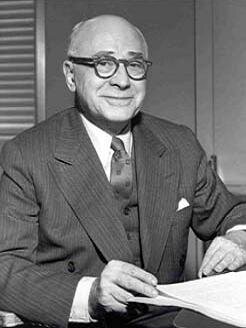
Harry Benjamin
Biography and Linksby Charlotte T.GA.
Harry Benjamin (1885-1986) was a German-born doctor. He is best known for his pioneering work with Transsexualism (Harry Benjamin's Syndrome). He received his doctorate in medicine in 1912 in Tübingen for a dissertation on tuberculosis. Sexual medicine interested him, but was not part of his medical studies. After several failed attempts to start a medical career in New York, in 1915 Benjamin started his own general medical practise. Later he also practised in San Francisco in the summer of every year. His special interest was hormonal research, and thus he became a disciple of Eugen Steinach, whom he visited in Vienna every summer through the twenties and early thirties. On these occasions, he also took frequent side trips to Berlin, where he visited both Magnus Hirschfeld and Albert Moll and participated in their congresses.
In 1948, in San Francisco, Benjamin was asked by Alfred Kinsey, a fellow sexologist, to see a child who "assured to be a girl", despite being born male, and whose mother wished for help that would assist rather than thwart the child. Kinsey had seen nothing of the like previously. Neither had Benjamin. This child rapidly led Benjamin to understand that there was a different condition to that of transvestism, under which adults who had such needs had been classified to that time (see for a competent history of earlier cases). Despite psychiatrists whom Benjamin involved in the case failing to agree amongst themselves on a path of treatment, Benjamin eventually decided to treat the child with oestrogen (Premarin, introduced in 1941), which had a "calming effect", and helped arrange for the mother and child to go to Germany where surgery to assist the child could be performed, but from where they ceased to maintain contact, to Benjamin's regret. However Benjamin continued to refine his understanding, in 1954 introducing the term Transsexualism, and going on to treat, with the assistance of carefully selected colleagues of various disciplines (such as psychiatrist John Alden and electrologist Martha Foss in San Francisco and plastic surgeon Jose Jesus Barbosa in Tijuana), several hundred patients with similar needs in a similar manner, often without accepting any payment. His patients regarded him as a man of immense caring, respect and kindness, and many kept in touch with him until his death.
Medical attitudes toward Harry Benjamin's Syndrome were very diverse among different countries, and many doctors considered all such people (including children) best treated by forced treatments such as drugged detention, electroconvulsive therapy or lobotomy.
Although Benjamin's 1966 book, The Transsexual Phenomenon, was immensely important as the first large work describing and explaining the affirmative treatment path he pioneered, he had already published papers and lectured to professional audiences extensively. In his work, Benjamin believed in a biological cause or explanation for Transsexualism, he was very much biologically oriented as himself declared jokingly to Freud in a meeting "that a disharmony of souls might perhaps be explained by a disharmony of endocrine glands."Charles L Ihlenfeld, who worked with Benjamin for 6 years, was to become his heir apparent, but then left the practice to undertake a psychiatric residency, has written that: "By and large psychiatrists of this time considered gender dysphoria as a manifestation of significant psychopathology and considered the treatment Benjamin was then prescribing as psychiatrically contraindicated. Rather than discouraging Benjamin, this response simply reinforced his feeling that psychiatry as a discipline lacked 'common sense.'"
Harry Benjamin was married to Gretchen, to whom he dedicated his 1966 major work, for 60 years. In 1979 the Harry Benjamin International Gender Dysphoria Association was formed, using Benjamin's name by permission. In his long and distinguished career, Benjamin came to know many famous American and European scientists, scholars, and artists.
An interview with Harry Benjamin on
the occasion of his 100th Birthday.
A brief biography of Dr. Benjamin with
additional pictures and writings by him.
Intro | Syndrome | Perspective
Copyright @ 2005-2006 http://sindromebenjamin.tk
Diagnosing Benjamin's Syndrome
Benjamin's Syndrome is not easy to diagnose. Though it is highly probable that there are biological indications for the syndrome, current medical technology isn't sophisticated enough to detect them. Autopsies carried out on people with Benjamin's Syndrome have suggested that they do exist, and genes that may be responsible for some cases have recently been discovered, but gender is a very poorly understood thing and we are a long way from being able to carry out reliable medical tests for the syndrome. But even if such tests were possible, they would not be very useful. There may be multiple causes for the syndrome, so testing for a single cause would be far from conclusive, and the appropriate treatment for any given individual depends much more upon their own feelings than on anything physical.
So, it is generally up to the sufferer to diagnose their condition for themselves. Psychiatrists and counsellors can sometimes help, but the person with Benjamin's Syndrome has to realise that they have a problem and something needs to be done about it. That something is wrong is usually clear from a young age; many if not most children with Benjamin's Syndrome feel different from other children, and uncomfortable with people's expectations of them. They may also be unhappy with their bodies, especially when puberty begins. But that doesn't automatically translate into an understanding that they're not really of the gender that they've always been told they belong to. Gender has such a fundamental importance to human society that the possibility of being so wrong about it can be literally unthinkable, especially when the concept is kept hidden and not talked about. While some people with Benjamin's Syndrome do know who they are for virtually all their lives, many do not figure it out until in their teens, twenties, or even older.
It does not help that Benjamin's Syndrome has significant social stigma associated with it, and much misinformation about it is perpetuated. Most people who've diagnosed themselves with Benjamin's Syndrome just want to deal with their condition as thoroughly as possible, then forget about it and get on with normal lives. So the people who get the most publicity are an outspoken minority who are not at all representative of people with Benjamin's Syndrome in general, and people who don't have Benjamin's Syndrome at all but are lumped into the same category by ignorant or sensationalist media. This makes it hard for people with Benjamin's Syndrome to recognise themselves in the way the condition is portrayed. And society's attitude towards Benjamin's Syndrome makes it scary to talk to anyone about the possibility that you may be suffering from it, or even think about it.
People with Benjamin's Syndrome are usually uncomfortable with their bodies, ranging from simply feeling that they're not quite right in some way through to outright loathing of the aspects that don't match their gender identity. They tend to relate better to people of their actual gender than those of the gender they were raised as, and have interests and personalities more typical of people of their actual gender (not stereotypes - people with Benjamin's Syndrome are just as varied as anyone else, and it isn't possible to label any particular trait as exclusively masculine or feminine), albeit influenced to some extent by socialistaion and hormones. People with Benjamin's Syndrome usually respond very favourably (emotionally if not physically) to hormone replacement therapy to bring their endocrine system in line with what is normal for their actual gender, and find changing gender roles to be of immense psychological benefit (disregarding the negative effects of social disapproval).
Not everyone who claims to or believes that they have Benjamin's Syndrome really does. Some gay men have been known to seek to become women to "make themselves straight", and there are mental disorders which can result in the expression of a desire to change sex without any genuine identification with the matching gender. Though psychiatric evaluation and counselling can not diagnose Benjamin's Syndrome, they can be useful in weeding out people who have some other problem, and coming to terms with it for those who do suffer from the condition.
Causes Of Benjamin's Syndrome
Overview
The real cause or causes of Benjamin's Synrome are not known for certain. Some might say people with Benjamin's Syndrome are born with souls of the opposite gender to their bodies, which may be true but isn't verifiable. Others consider it to be simply an issue of upbringing, which seems unlikely given that it has occured throughout history in all societies and social classes. But the most plausible explanation is that people with Benjamin's Syndrome have brain structures that do not match the sex of the rest of their bodies, due to some genetic or hormonal irregularity.
A Basic Guide To Human Sexual Differentiation
When a human egg is fertalised by a sperm, a new life begins from a single cell containing a mixture of DNA from both parents. This DNA (usually) contains either the chromosome pair XX or the pair XY. The cell replicates itself, and after a while the cells seperate into three distinct groups: one that will later form the skin, nervous tissue, and brain; one that will form bone, blood, and muscle; and one that will form most internal organs. A placenta forms to connect the embryo to its mother. This transfers substances such as nutrients from the mother's blood stream to the embryo, and also produces hormones to regulate the embryo's development.
The embryo begins developing gonads which will later differentiate into either testes or ovaries by means which are not well understood, but involve hormones and the XX or XY chromosomes. The embryo also develops the beginnings of both male and female internal reproductive structures, one of which is absorbed back into the body depending on certain hormones. The presence of testosterone causes the male structures to develop further, and the presence of AMH causes the female structures to be reabsorbed. Both are produced by the testes. In the absence of both hormones, the male structures will be reabsorbed and the female structures will develop. The external genitalia is initially female, but the presence of testosterone causes further development into a male configuration. The seam where the proto-labia fused together can sometimes be seen on the scrotum and the underside of the penis of adult males.
The sexual differentiation of the brain is not as clear cut, but is similarly affected by hormones. The brain develops quite independently from the reproductive system, with the cells that will form the two systems differentiating very early in the embryo's development. Sexual differentiation for the two occurs at different times, may involve different hormones and different genes, and involves tissues that may respond differently to the same hormones. The brain is also exceptionally complex, and could be affected by much smaller hormonal variations than other parts of the body.
What Can Go Wrong
The embryo's DNA is essentially the blueprint from which it knows how to develop. This blueprint contains much more information than the embryo will actually use. Genetic abnormalities can cause errors in the parts of the blueprint that the embryo is using, or tell it to use the wrong parts of the blueprint. So some parts of the body might not know they're supposed to make certain changes when they're exposed to testosterone, for example. Also, the presence of various hormones at various stages during the embryo's development helps regulate which parts of the blueprint are followed. If the wrong hormones are introduced at critical times (eg by the mother taking pills), or something prevents the right hormones from being present, the embryo will not develop as expected.
Abnormalities in sexual differentiation as a group are known as Intersexuality. Androgen Insensitivity Syndrome (AIS) is a good example. Embryos with Total AIS do not recognise testosterone, so their external genitalia is female. However, they are affected normally by AMH, so if they have XY chromosomes they will not develop female internal organs (eg the uterus).
Benjamin's Syndrome is a form of intersexuality in which the brain of a person with XY chromosomes fails to masculinise for some reason, or the brain of a person with XX chromosomes does masculinise (there may be many ways in which this can happen). It is often (but by no means always) accompanied by other signs of mild atypical sexual differentiation, eg a particularly large clitoris or small penis, unusually pronounced proto-labial seam, late or minimal puberty, etc. It can also coexist with other types of intersexuality, though if another kind of intersexuality is present then an additional diagnosis of Benjamin's Syndrome would generally be considered superfluous.
Technically speaking, this makes the brain structure/gender identity of a person with Benjamin's Syndrome the thing which is "wrong" (unless their brain matches their chromosomes and everything else is wrong, but that isn't common). However, the brain is by far the most important part of the body; the rest is just a shell to keep the brain alive. While the gender identity of a person with Benjamin's Syndrome may not be what was intended by their DNA, it is a perfectly normal, healthy state, and for all practical purposes they are the same as if their brain was as intended and their body the "mistake". The XX/XY chromosomes do affect the sexual differentiation of the embryo, but are by no means the only factor, and are not a useful means of determining a person's actual sex. In some species, chromosomes are completely irrelevant, and sex is determined by, for example, the temperature at which the eggs are incubated. Members of other species naturally change sex during their lifetimes.
Women with Benjamin's Syndrome are more common than men (there is no consensus on the exact ratio), which is a natural consequence of human development being female by default (it's generally easier for something to fail to happen when it should than for something to happen when it shouldn't).
Artificially Induced Benjamin's Syndrome
One situation in which the cause of Benjamin's Syndrome is quite clear is the sexual mutilation of children or infants. This most often occurs with physically intersexed infants, where the individual is operated on to make them conform more closely to a sex chosen by a doctor with no possibility of consent or regard for their brain structure/gender indentity. It can also occur if a male infants's penis is acidentally damaged or removed, and it is easier to surgically transform him into a female and raise him as such than to reconstruct the penis. It is common for people in these situations to be very unhappy with what was done to them, and revert to living according to their actual gender later in life.
External Links
The Visible Embryo - information on human development from conception to birth.
John/Joan - an example of artificially induced Benjamin's Syndrome.
Transsexuality may be genetic - a post at Deja.com regarding a Swedish study that may have identified the cause of some cases of Benjamin's Syndrome.
A sex difference in the human brain and its relation to transsexuality
Resources for Women
Hormone Replacement Therapy
An overview of HRT for women with Benjamin's Syndrome. Details of the main types of hormone medication and their effects, focusing on my own experiences. This should not be used to plan your own HRT regime without a doctor's assistance, as individual respones to HRT are highly variable and what works for me may not suit you.
More...Genital Reconstruction Surgery
Genital Reconstruction Surgery (GRS) corrects the most obvious physical symptom of Benjamin's Syndrome by constructing a vagina and vulva from the existing genital tissue. The techniques are very sophisticated (though not perfect and not without risk) and a good surgeon can create a result virtually indistinguishable from the natural version.
More...GRS - My Experience (Part 1, Part 2)
A description of my experience of GRS with Dr Toby Meltzer, and the long term results.
More...Electrolysis
Unless you begin HRT very young, you'll probably need electrolysis (aka zapping) to remove facial hair. This is not fun, or quick, or cheap.
More...Miscellaneous Advice
Some random advice for women with Benjamin's Syndrome, regarding voice, makeup, and cosmetic surgery.
More...External Links
TS Road Map - a comprehensive site on practical issues for women with Benjamin's Syndrome.
Becky Allison "Friends and Family Issues" - Becky Allison's pages about Benjamin's Syndrome.
Transsexual Women's Resources - presents some extremely weird ideas about Benjamin's Syndrome, but does have a lot of good information as well.
Transgender Support Site - presented by Melanie Anne Phillips.
Resources for Men
Overview
This section is unfortunately rather less detailed and accurate than the section for women, since being a woman myself that is what I know most about. I will try to expand this in time, and suggestions and corrections for these pages are particularly welcome.
Hormone Replacement Therapy
An overview of HRT for men with Benjamin's Syndrome. Details of the main types of hormone medication and their effects. This should not be used to plan your own HRT regime without a doctor's assistance, as individual respones to HRT are highly variable.
More...Surgery
Information on mastectomies, hysterectomies, and genital reconstruction surgery (GRS).
More...Miscellaneous Advice
Some random advice for men with Benjamin's Syndrome.
More...External Links
FTM International - resources for men with Benjamin's Syndrome.
FTM Informational Network - resources for men with Benjamin's Syndrome.
American Boyz - a support and social group for men with Benjamin's Syndrome and others.
TransBoy Resource Network - internet resources for FTM transgender and transsexual youth and others.
FTM 101 - a guide to medical issues for men with Benjamin's Syndrome
Calling All Trans* - a gender related web page focusing on masculinity.
Transland Resources - resources for men with Benjamin's Syndrome.
MtMInFo - email support list, with Book/Ordering List.